
IRS Added an Audit Flag to Form 4562, actually 3 Flags
Good News: No Tax Law Changes.
Reality: Your Aircraft Just Became a Standalone Audit Flag
What was once buried in a free-form description field is now structured, searchable, and immediately visible to IRS systems.
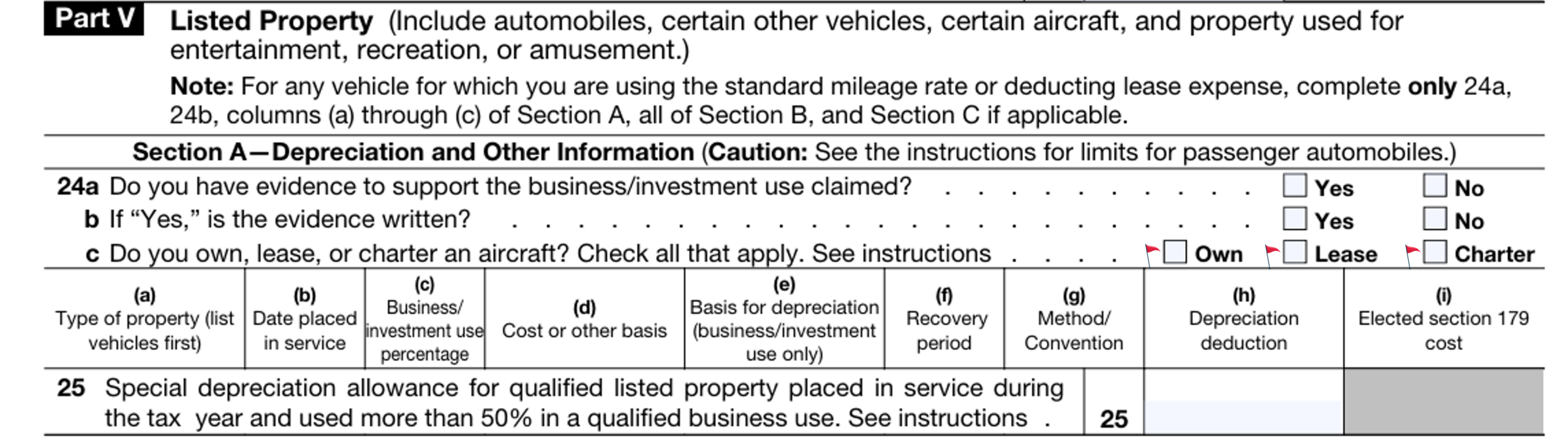
For the 2025 tax year, the IRS revised Form 4562 to add a new Line 24c requiring taxpayers to disclose whether they own, lease, or charter an aircraft. The good news is that nothing about the depreciation rules themselves has changed—bonus depreciation, Section 179, and MACRS recovery periods remain intact. The less comfortable reality is that aircraft are now explicitly identified through a mandatory checkbox.
Previously, aircraft were disclosed only through free-form property descriptions on depreciation schedules. A taxpayer might list “aircraft” or a model number, but there was no standardized tagging. Now, Line 24c requires filers to “check all that apply” for ownership, lease, or charter activity. That shift moves aircraft from descriptive reporting to categorical reporting—an important distinction in an era of automated audit selection.
This does not create a new tax, eliminate depreciation benefits, or change eligibility thresholds. It is purely a disclosure update. However, aircraft have historically been an enforcement focus due to high asset values, significant bonus depreciation claims, business-versus-personal use allocation issues, related-party structures, and entertainment disallowance rules. A dedicated checkbox makes it easier for those returns to be identified for review.
The practical takeaway is straightforward: assume increased visibility. Aircraft owners and operators should treat documentation discipline as essential—maintaining clear flight logs, substantiating business purpose, confirming structural alignment with operational reality, and reviewing depreciation strategy in light of evolving bonus phase-down rules.
The benefits remain powerful. The scrutiny just became more efficient. In aviation tax planning, structure and preparation are no longer optional—they are strategic necessities.